Where each length sits
Necklace lengths are sold in inches in the US, usually in 2 inch steps. The table below shows where each common length tends to fall on an adult with an average neck size of about 13 to 14 inches. Treat it as a starting point. On a broader neck or frame, every length sits higher, and on a slimmer one, lower.
| Length (in) | Length (cm) | Name | Where it usually sits |
|---|---|---|---|
| 14 | 35.6 | Collar | Snug around the middle of the neck |
| 16 | 40.6 | Choker | At the base of the neck |
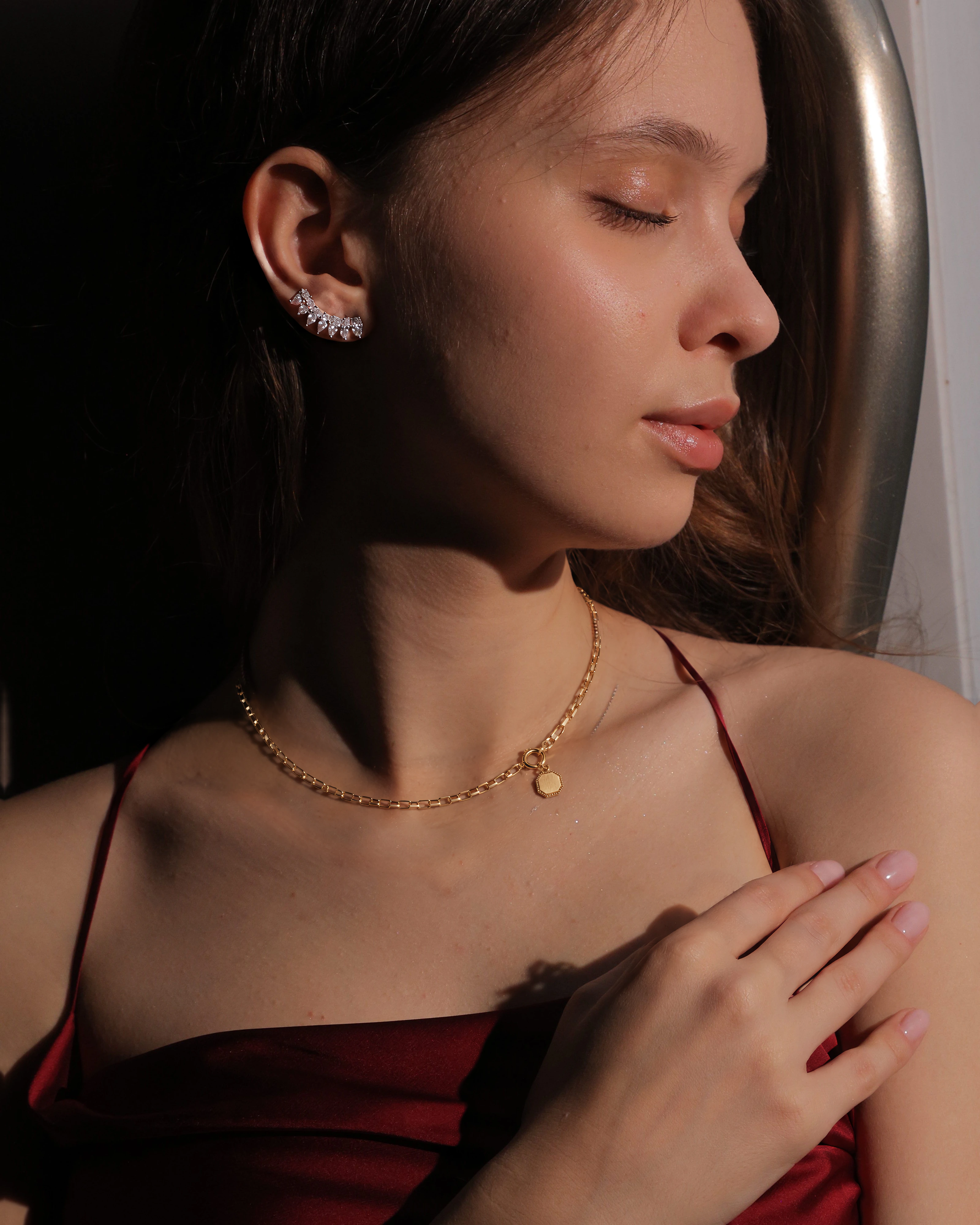
| 18 | 45.7 | Princess | On or just below the collarbone |
| 20 | 50.8 | Matinee (short) | A few inches below the collarbone |
| 22 | 55.9 | Matinee | At the top of the chest |
| 24 | 61.0 | Matinee (long) | Above the bust line |
| 30 | 76.2 | Opera | At or below the bust line |
Measure before you buy
The most reliable way to choose a length is to see it on yourself. Take a piece of string or a thin cord, drape it around your neck, and let it fall where you would like the chain to sit. Mark the point where the two ends meet, then lay the string flat on a ruler. Wear the top you usually pair with necklaces when you do this, since neckline shape changes what looks right.
If you already own a necklace you like, lay it flat with the clasp closed, straighten it into an oval and measure from end to end along the chain, including the clasp. That number is its length.
- Measure your neck at its base with a soft tape. Add 2 inches for the shortest length that will feel comfortable.
- If you plan to wear a necklace over turtlenecks or high collars, add another 2 inches.
- For pendants, measure to the point where you want the bottom of the pendant to sit, then subtract the pendant's height.
How pendants change the length
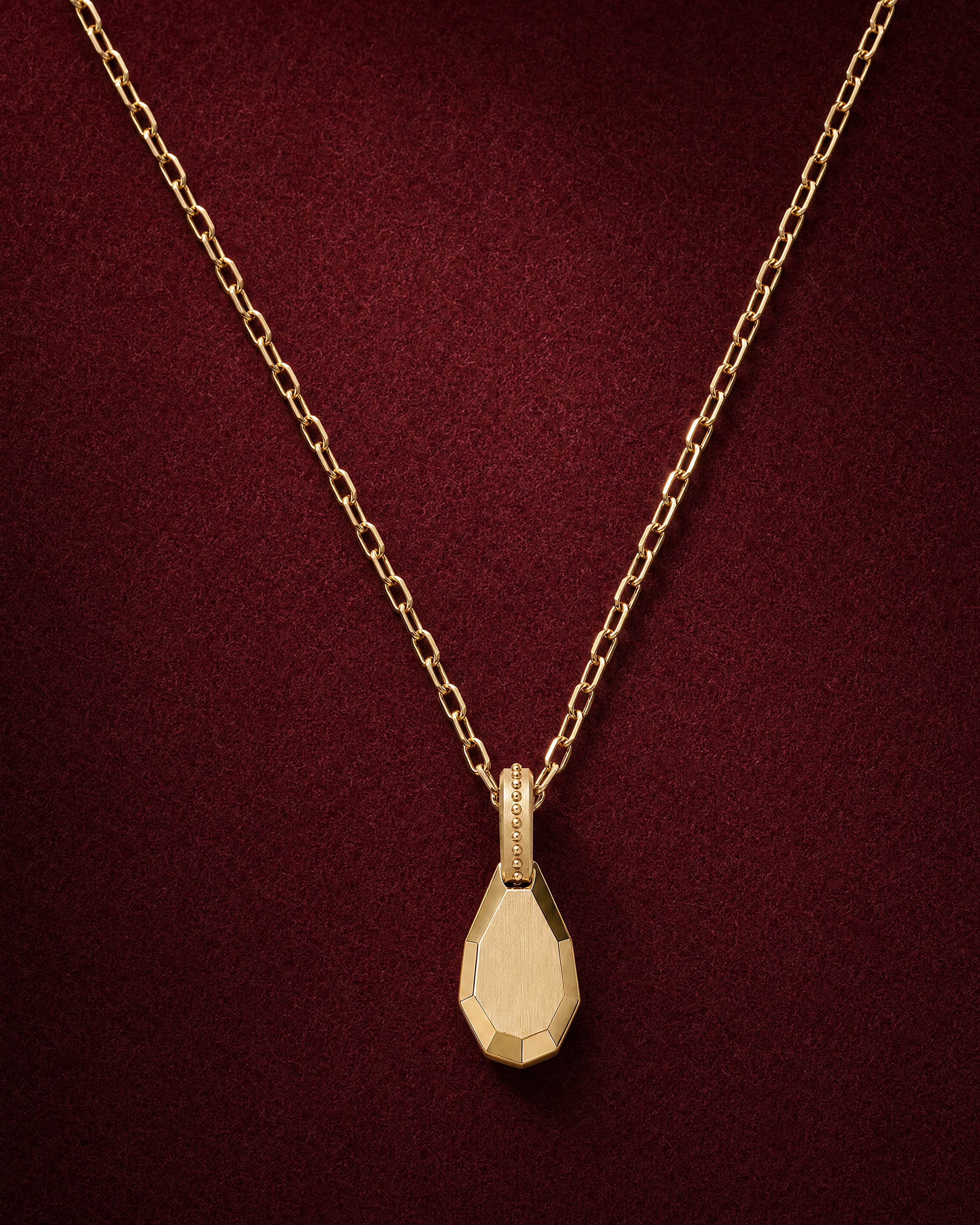
A pendant pulls the chain into a V and adds its own height to the drop. A 16 inch chain with a 20 mm pendant can read more like an 18 inch chain without one. Heavier pendants pull more, and finer chains drape more steeply than heavier ones.
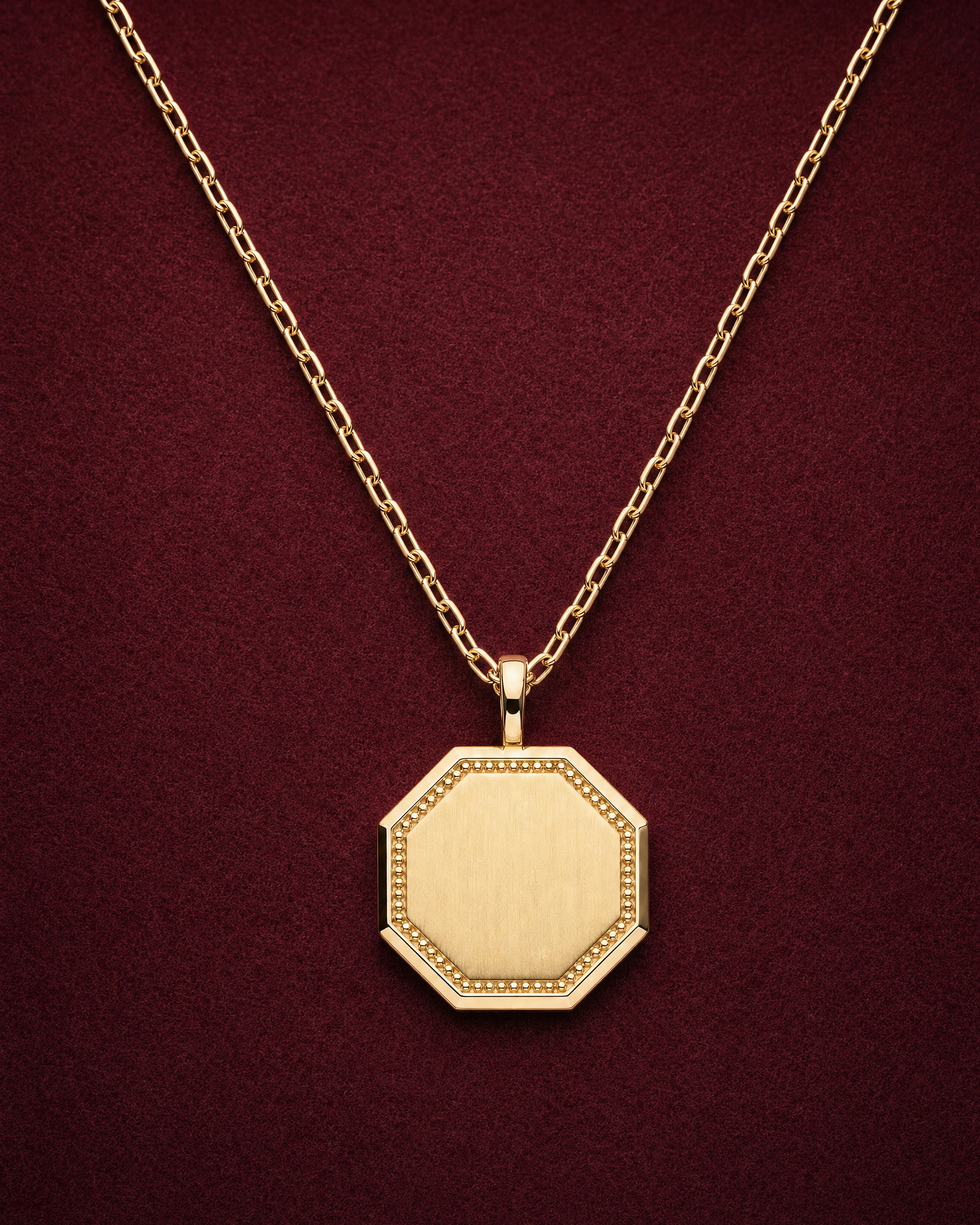
For small pendants, such as a drop or a bar, an 18 inch chain is a reliable default. It places the pendant just below the collarbone, where it sits flat and is easy to see in most necklines. Larger medallions often look better on 20 or 22 inches, where they have room to hang without resting on the collarbone. If a pendant flips or turns often, the chain may be too short for it, letting it ride on the curve of the collarbone.
Necklines and proportion
Necklines frame a necklace, so they are worth considering together. Crew necks and tees pair well with 16 and 18 inch chains that sit just above or on the neckline. V-necks suit pendants whose drop roughly follows the V. Scoop and square necklines leave more open skin, which suits layered chains of two or three lengths.
Proportion matters as well. Shorter lengths draw the eye up toward the face. Longer lengths draw a vertical line down the body. Neither is better. It depends on what you want the piece to do and what else you are wearing.
Layering several chains
Layered necklaces look intentional when each chain has its own space. The simplest rule is to leave about 2 inches, or 5 cm, between lengths. A classic three-layer combination is 16, 18 and 20 inches, or 16, 18 and 22 inches if the bottom chain carries a pendant.
- Start with the shortest, finest chain and add weight as you go down.
- Mix textures, such as a fine cable chain with a flat or twisted one, so the layers read separately.
- Keep the heaviest piece, or the only pendant, on the longest chain.
- Fasten each clasp and hang the chains separately when you take them off to avoid knots.
- Mixing gold colors is fine. Repeat each color at least twice so the mix looks deliberate.
Chain thickness and strength
Fine chains, around 1 mm wide, are delicate in appearance and suit small pendants and layering. They are stronger than they look in solid gold, but they can catch on clothing and bags, so take them off for sleep and exercise. Chains of 2 mm and wider hold their shape better, carry heavier pendants, and work well worn alone.
Solid gold chains in 14k are slightly harder than 18k, which makes them a practical choice for fine chains worn every day. Check the clasp: a lobster clasp is more secure than a spring ring for daily wear.
Finding your length at VÉRA
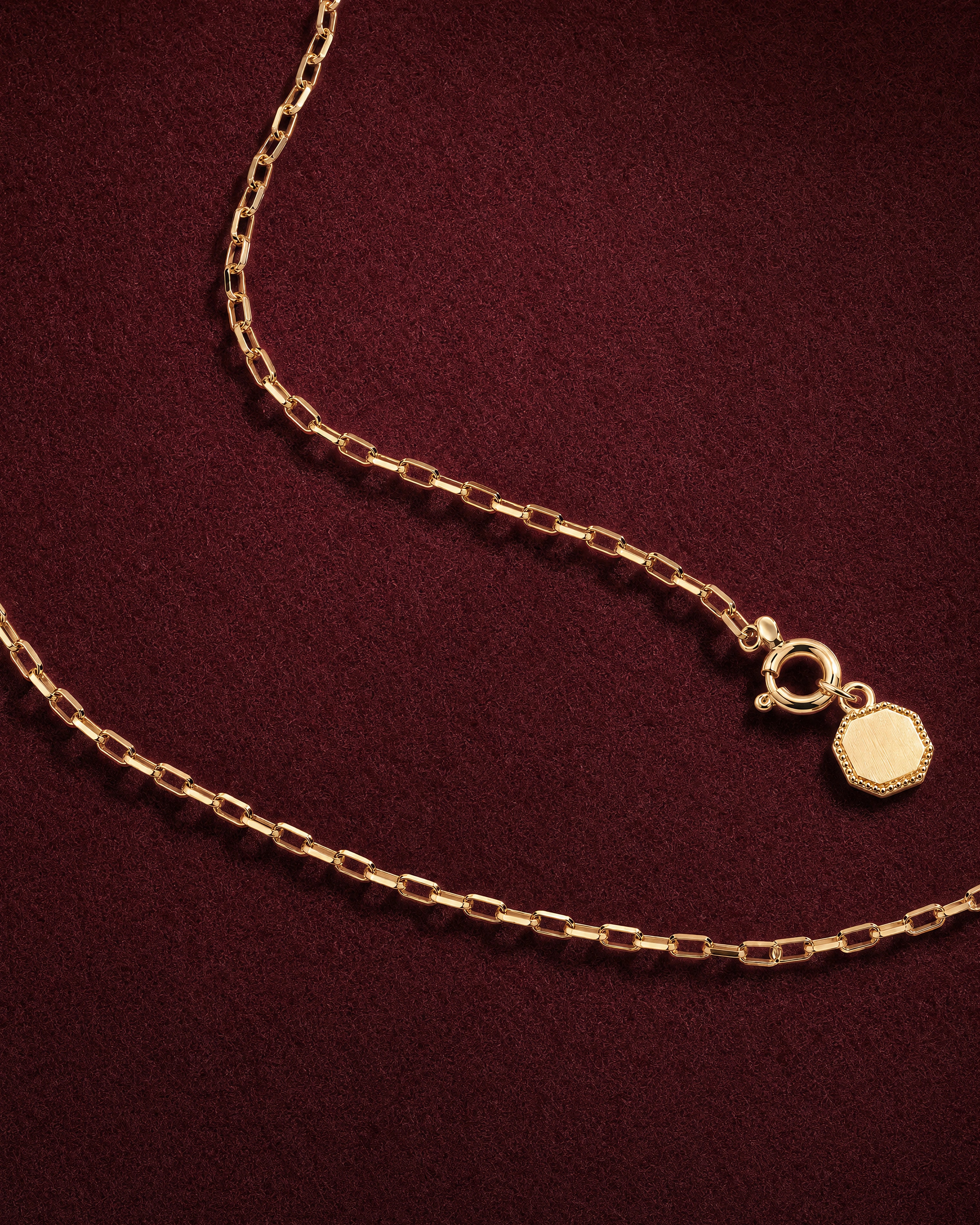
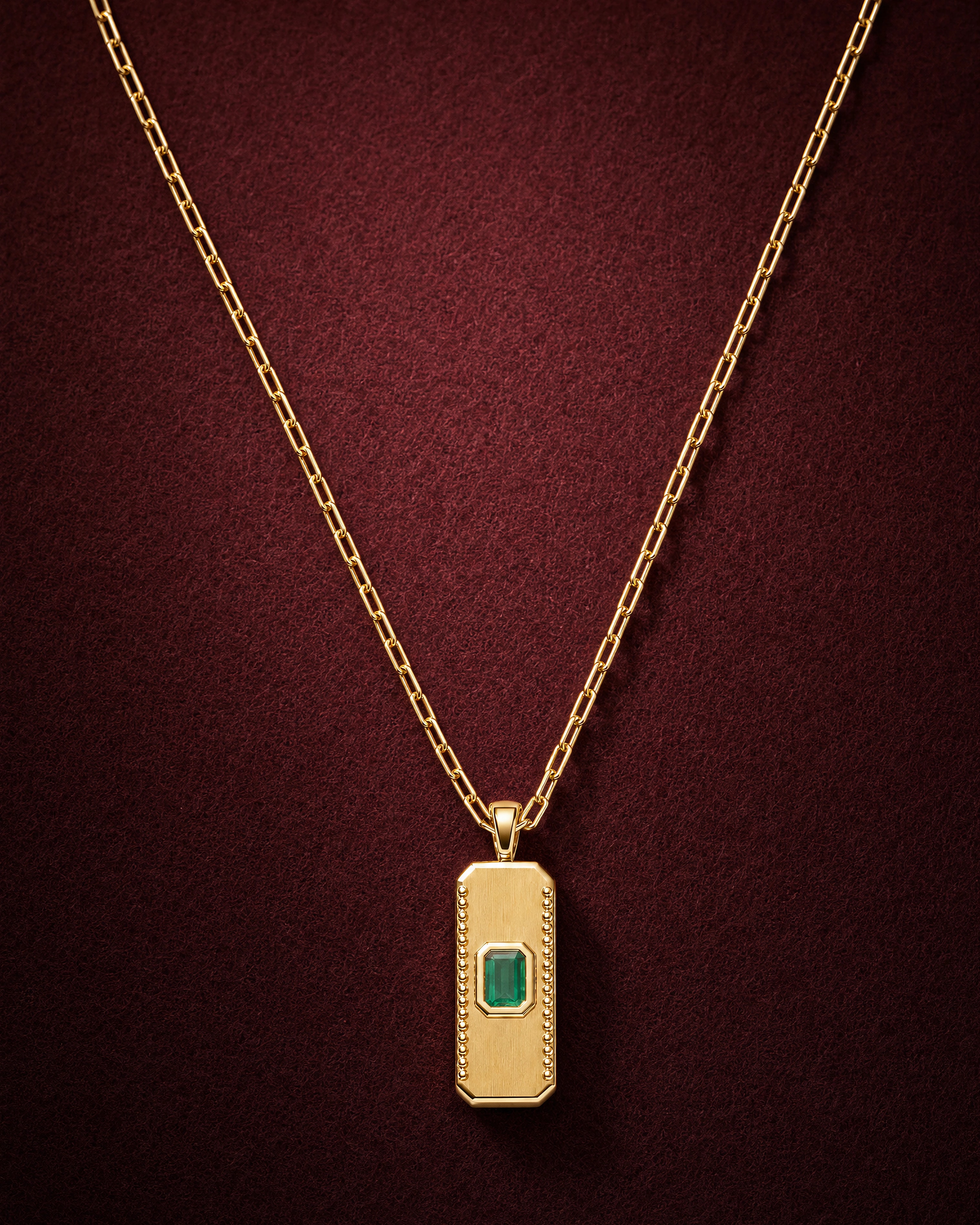
Check the chain length listed on each VÉRA necklace page. If you are choosing between two lengths, measure a necklace you already own or use the string method above, and compare. Our Fil Chain Necklace is a fine, everyday chain that layers well, while the Drop Pendant, Medallion Necklace and Emerald Bar Pendant each place a single focal point on the chain.
If a length does not sit the way you hoped, unworn ready-to-wear pieces can be exchanged within 30 days of delivery. You can also visit our New York studio by appointment to try lengths in person.