What makes a piece suitable for every day
An everyday piece is one you can put on in the morning and forget about. It does not catch on sweaters, pull hair or press against a phone. It looks right with a T-shirt and with something more formal. It holds up to handwashing, typing and carrying bags.
In practice, that means low profiles, smooth edges, secure closures and solid metal that will not wear through. Plated and vermeil pieces lose their gold layer with daily friction, often within a year or two. Solid gold costs more at the start but does not need replacing.
- Low-profile settings that sit close to the finger or ear.
- Secure clasps and closures, such as lobster clasps and hinged hoops.
- Hard, tough stones, such as diamond and sapphire, for rings.
- Solid 14k or 18k gold, not plated metal.
- A size and weight you can wear for a full day without noticing.
Start with three foundation pieces
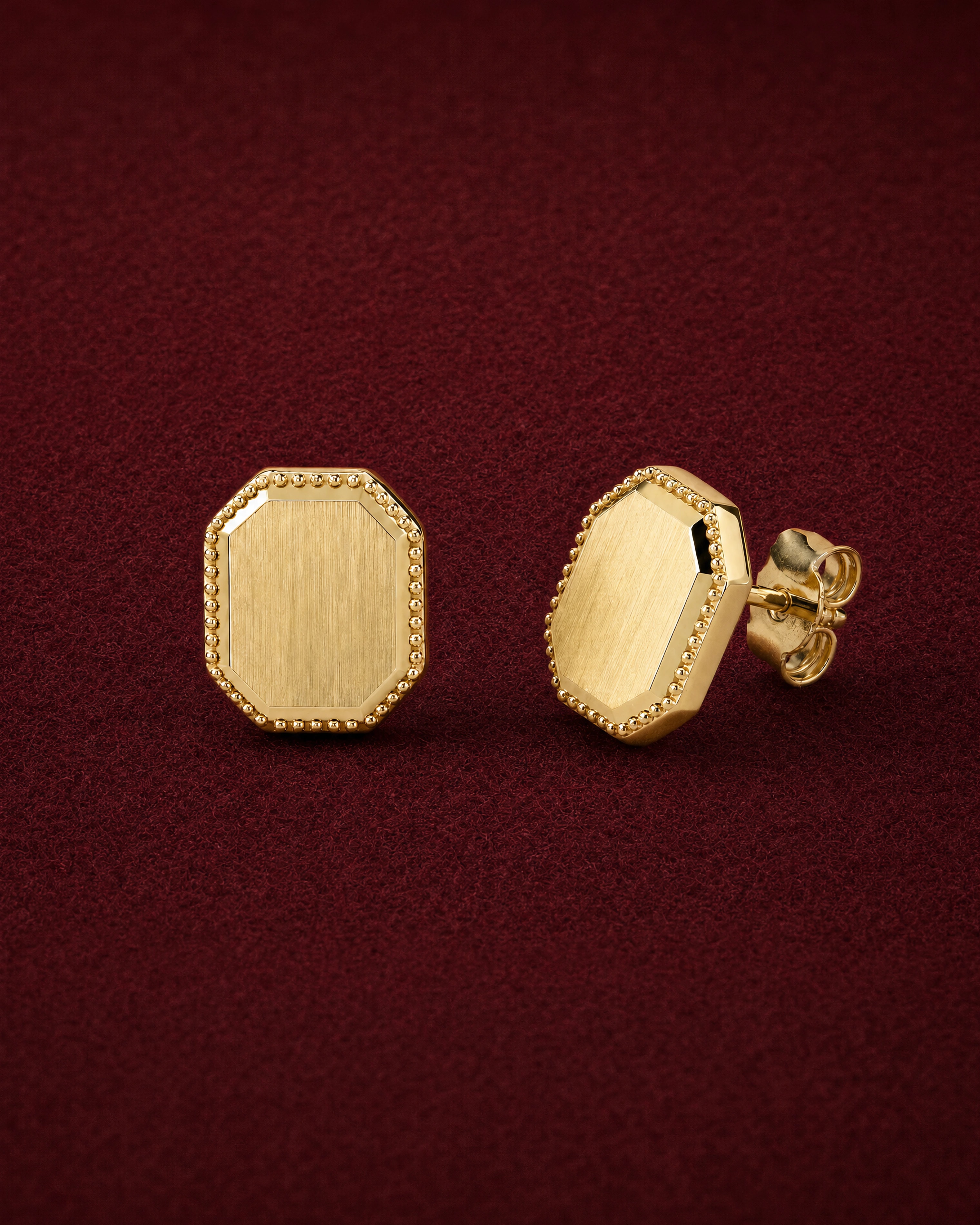
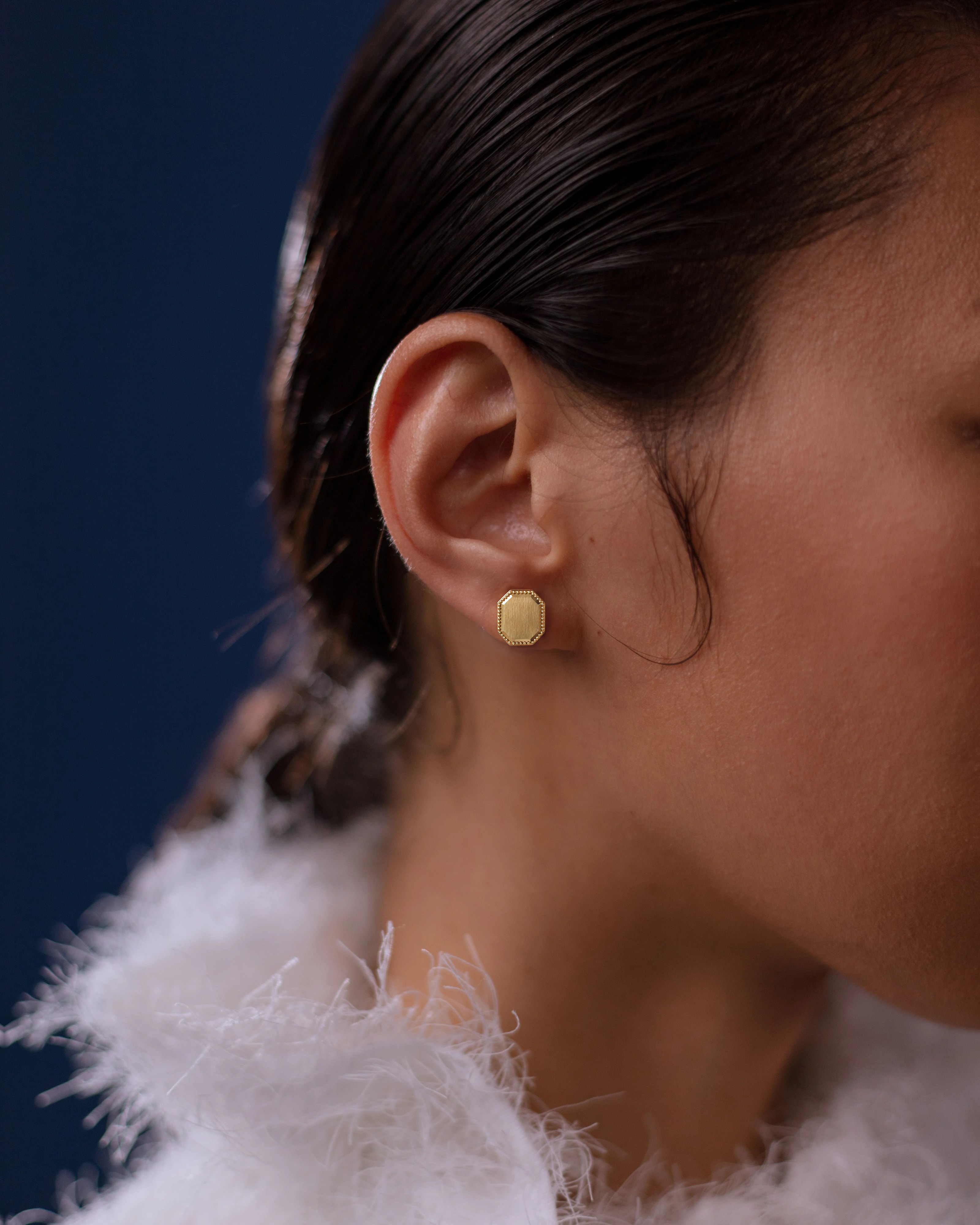
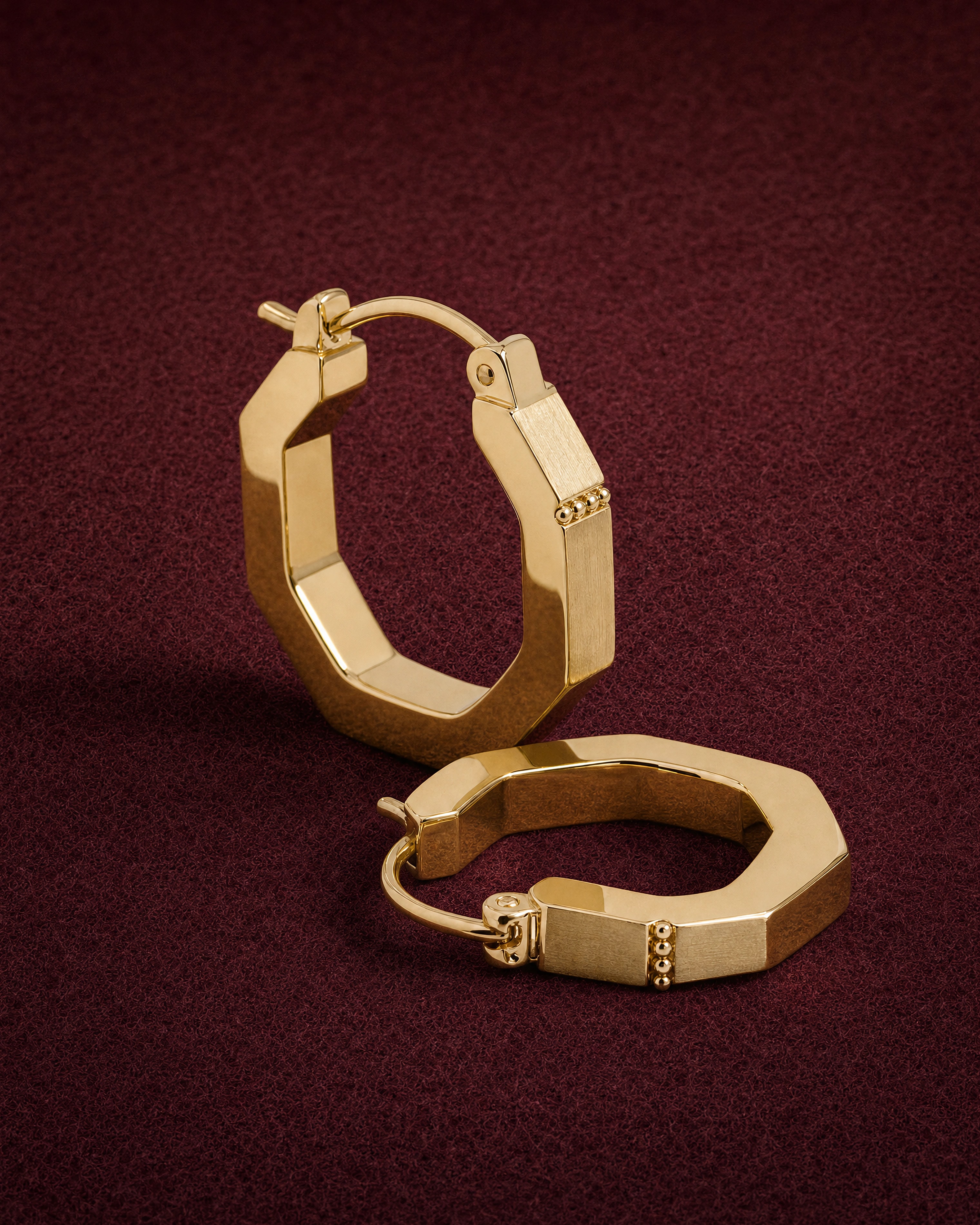
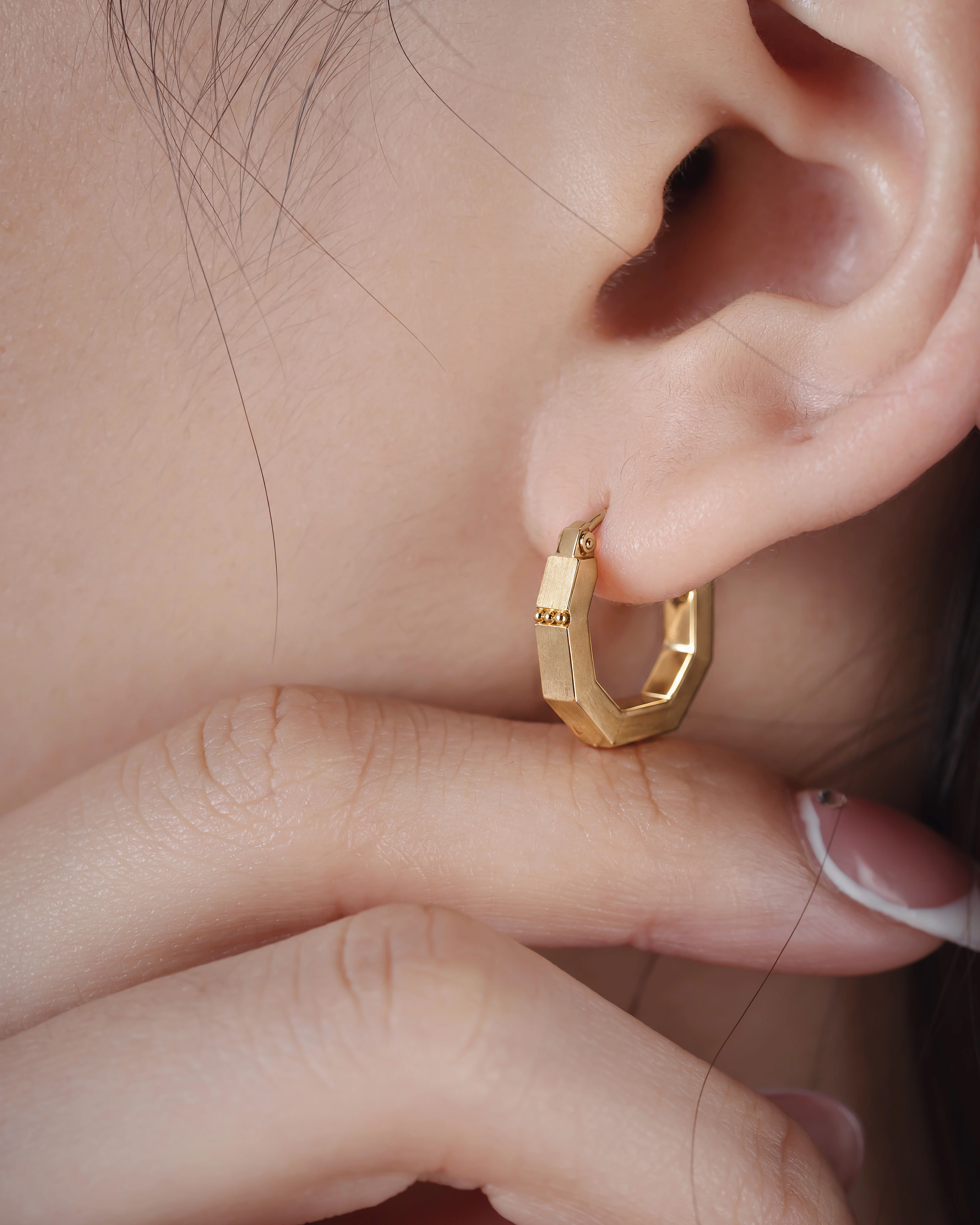
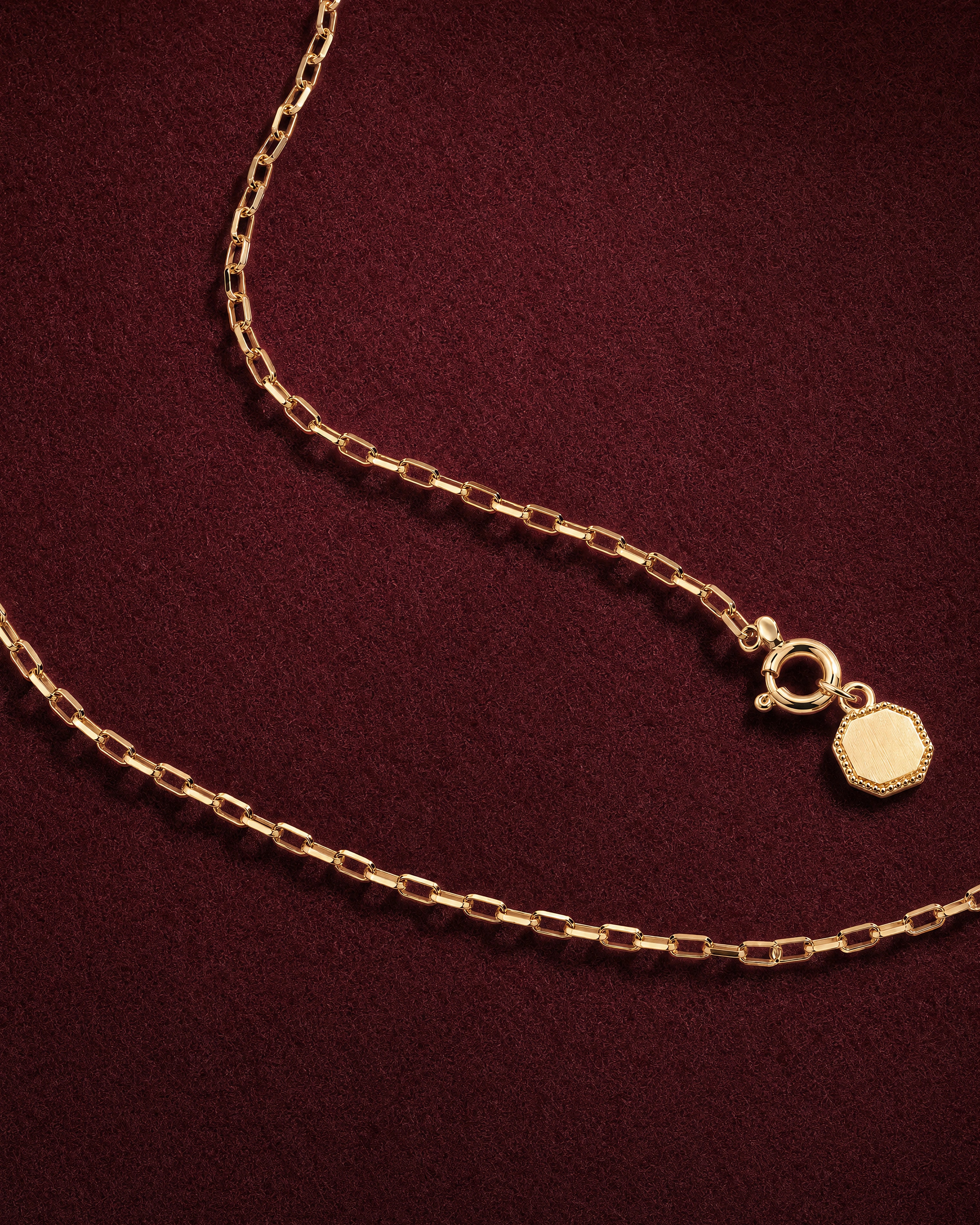
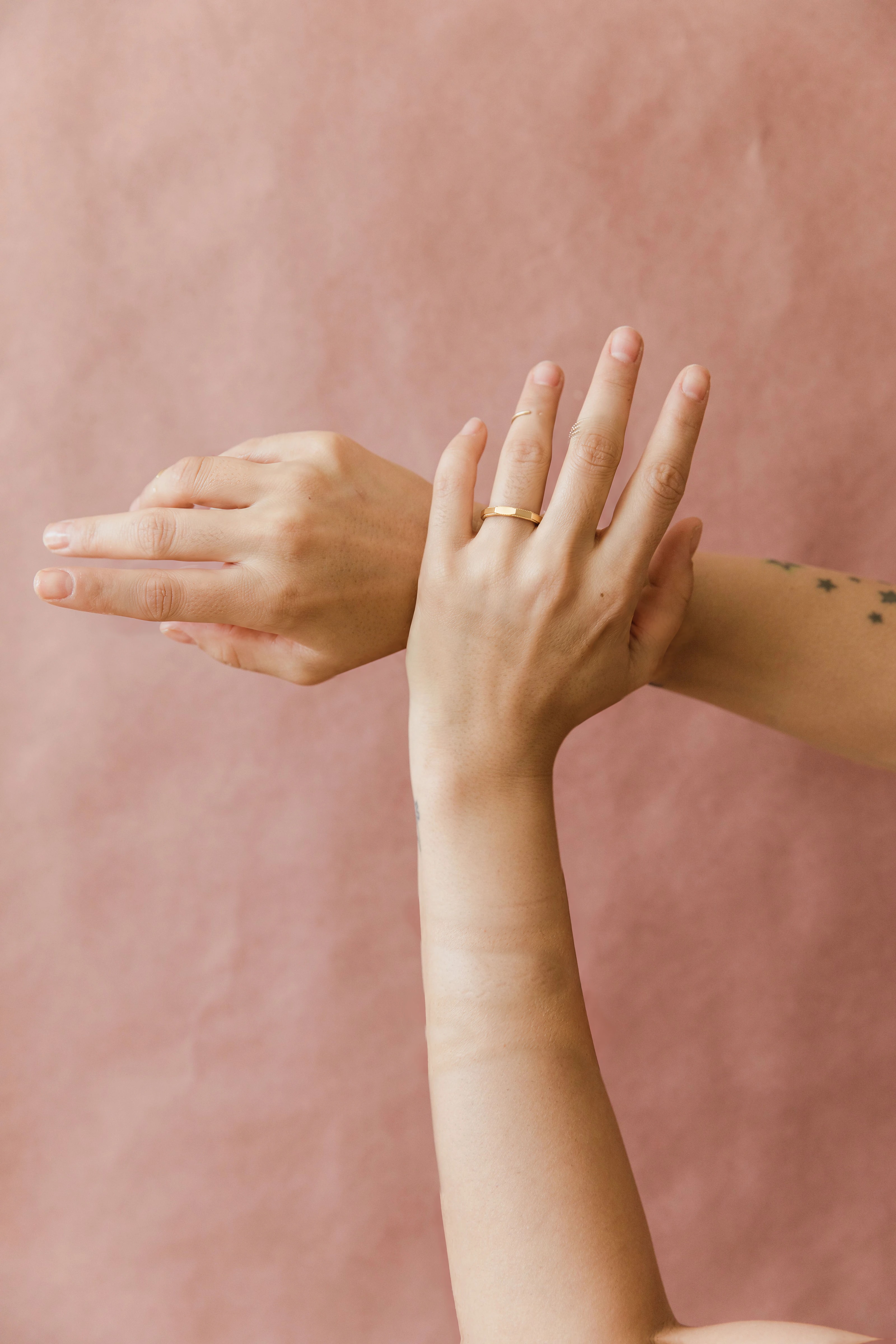
Most everyday collections are built on the same three pieces. Small earrings that you can sleep in or leave in for days, such as studs or small hoops. A fine chain that sits around the collarbone, worn alone or with a pendant. A plain band or slim ring on the hand you notice most.
These three cover nearly every situation. They also form the base for everything you add later, so choose them with care. Wear each piece for a few weeks and notice whether you reach for it without thinking. That is the sign it belongs.
At VÉRA, a starting set could be the Pebble Studs in 18k ($380) or the Arc Hoops in 14k ($520), the Fil Chain Necklace in 14k ($420) and the Thread Stacking Ring in 14k ($290) or the Orra Band in 18k ($640).
Choose a metal direction
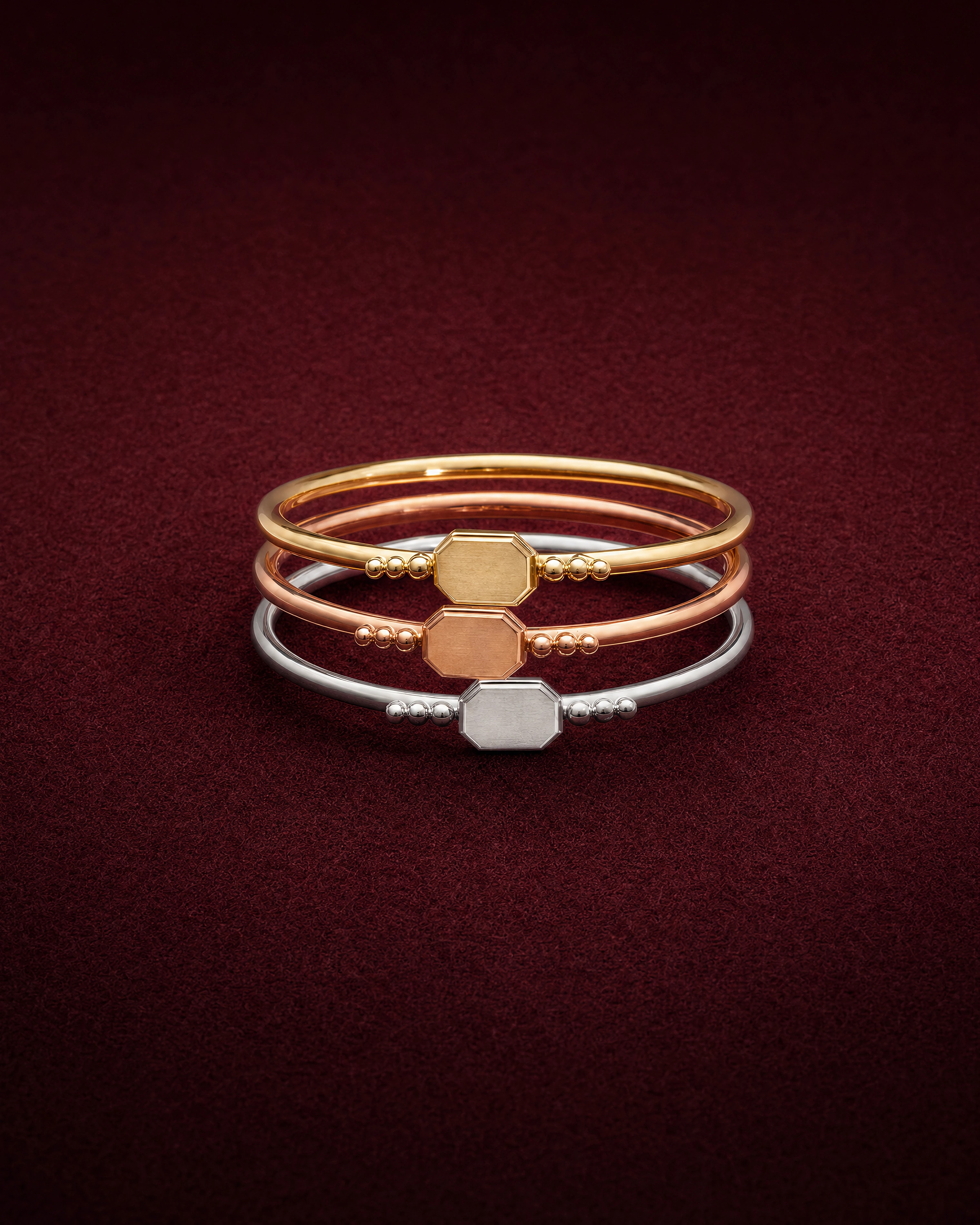
A collection is easier to wear when the pieces share a color. Yellow gold is the most versatile and flatters most skin tones. Rose gold is softer and warmer. White gold reads cooler and pairs well with silver-toned watches.
Mixing metals is entirely acceptable, and it can look relaxed and personal. The trick is to repeat each color at least twice so the combination looks deliberate. A yellow chain with a white gold pendant, worn with a yellow band and a white gold band, holds together. One stray white gold piece among many yellow ones tends to look accidental.
Karat affects color too. 14k and 18k yellow gold differ slightly in tone, so if you plan to wear two pieces touching, such as stacked rings, choose the same karat.
Build in layers
Once the foundation is in place, add pieces that layer with it. A second chain about 2 inches longer than the first. A second ring to stack with your band. A second piercing for a small stud or huggie. A fine bracelet that sits next to a watch.
Each addition should work with what you already own. Before you buy, picture it with your three foundation pieces. If it only works on its own, it may be a statement piece rather than an everyday one, which is fine, but it belongs in a different part of your collection.
Add one piece with meaning
The pieces people wear for decades are usually the ones attached to a story. An engraved medallion with a child's initial, a ring marking an anniversary, or a pendant bought to celebrate a milestone. These pieces anchor a collection and give it a personal character no style guide can supply.
If you are building a collection over time, consider making one purchase a year that is tied to a moment. In ten years, those pieces will be what you reach for.
Spend where wear is highest
Not every piece needs the same budget. Rings and bracelets take the most knocks, so they benefit most from solid construction, a harder alloy such as 14k, and well-protected stones. Earrings and pendants sit away from contact and can carry softer stones, such as pearls and emeralds, and more delicate designs.
Avoid buying several inexpensive pieces where one well-made piece would do the job. A single fine chain worn every day for ten years costs less per wear than three plated chains replaced as they fade.
Care for pieces you wear daily
Everyday jewelry needs simple, regular care. Take rings off for the gym, swimming, gardening and cleaning. Put jewelry on after sunscreen, lotion and perfume. Clean pieces in warm water with a drop of mild soap once a week or so, and store them separately so they do not scratch each other.
Have rings with stones checked at least once a year. At VÉRA, professional cleaning and claw checks at our New York studio are free for the life of the piece, and every piece carries a 2-year warranty against manufacturing defects.